Hotel oil disposal in Gravesend with legal collection and paperwork
A collection alone doesn’t complete the disposal process. For hotel oil disposal in Gravesend, used cooking oil should be stored properly, collected by an authorised collector and taken to an authorised recovery or disposal site. Keep the Waste Transfer Note as a record of the waste movement.
A clear collection routine and complete paperwork help a busy hotel manage used oil without disrupting kitchen service. Keep the oil in a dedicated, labelled container, agree an accessible collection point and retain the transfer document with the hotel’s waste records.
This guide explains how to arrange legal waste oil collection in Gravesend, what paperwork to retain and how authorised recovery or disposal works. It also covers practical storage considerations and the points that can shape a collection plan, so you can keep the process straightforward and organised.
Key Takeaways
- Set up a collection routine that fits your kitchen’s oil output and available storage space.
- Keep used cooking oil separate from other waste and arrange collection by an authorised collector.
- Understand which paperwork records the transfer and why it matters for your business records.
- Find out what should happen to the oil after collection, including its route to an authorised recovery or disposal site.
- Review the storage rules that may apply to larger oil containers and how they affect your handling arrangements.
Why Choose Us For Waste Oil Collection In Gravesend?
Commercial oil collection should fit how a hotel operates, not interrupt kitchen service. For hotel oil disposal in Gravesend, consider the site’s location, access arrangements and the type of oil produced when setting up a collection routine.
Coverage in and around Gravesend
Gravesend sits within Kent, so local coverage is a key consideration for a hotel choosing a commercial collection service. For hotel oil disposal in Gravesend, assess whether the service can reach each relevant premises, including kitchens in nearby towns or separate hotel buildings. Loading areas, restricted entrances and the location of the oil store can affect how collection works at each site.
Hotels with several premises should provide clear instructions for each address. For example, a central operations team may need separate directions for a restaurant kitchen and a function-space kitchen. Specifying each storage point helps the collection team access the correct container.
Used cooking oil services for hotels
How do used cooking oil collection services compare for Gravesend hotels? Consider whether the provider handles commercial kitchen oil, serves the relevant premises and supplies the paperwork needed to record the transfer. These practical points help distinguish a commercial arrangement from a household waste option.
Which companies collect used cooking oil from hotels in Gravesend, Kent? Commercial waste oil collectors serving Kent handle collections for hospitality and food-service premises. A hotel can compare the service area, accepted waste stream and arrangements for access. Those details help determine whether a collector’s service suits the site.
A collection arrangement can account for how a hotel uses its kitchens. A restaurant, breakfast room and event kitchen may have different operating hours and access routes. Share relevant access details when scheduling collection, especially if the service entrance is shared with deliveries or guest facilities.
Garages, workshops and fleets may produce oil waste, but it is not the same stream as hotel cooking oil. A hotel group with an on-site maintenance workshop should keep workshop waste distinct from kitchen-generated oil. This distinction helps staff route each material appropriately and prevents collection instructions for food-service oil being applied to engine or industrial oils.
Hotels can also consider how the collection arrangement works across a wider estate. A Kent hotel group with sites in different towns may need clear instructions for each location, including the entrance used, the storage area and the staff member responsible for access. These details help make collections more straightforward without relying on a single site’s layout.
For commercial waste management, compare coverage, accepted materials, paperwork and site-handling arrangements. A service that fits the hotel’s premises and kitchen operations can make oil collection easier to coordinate with everyday work. Keep the focus on the actual waste stream and the practical needs of each location.
Waste transfer notes and hazardous waste paperwork
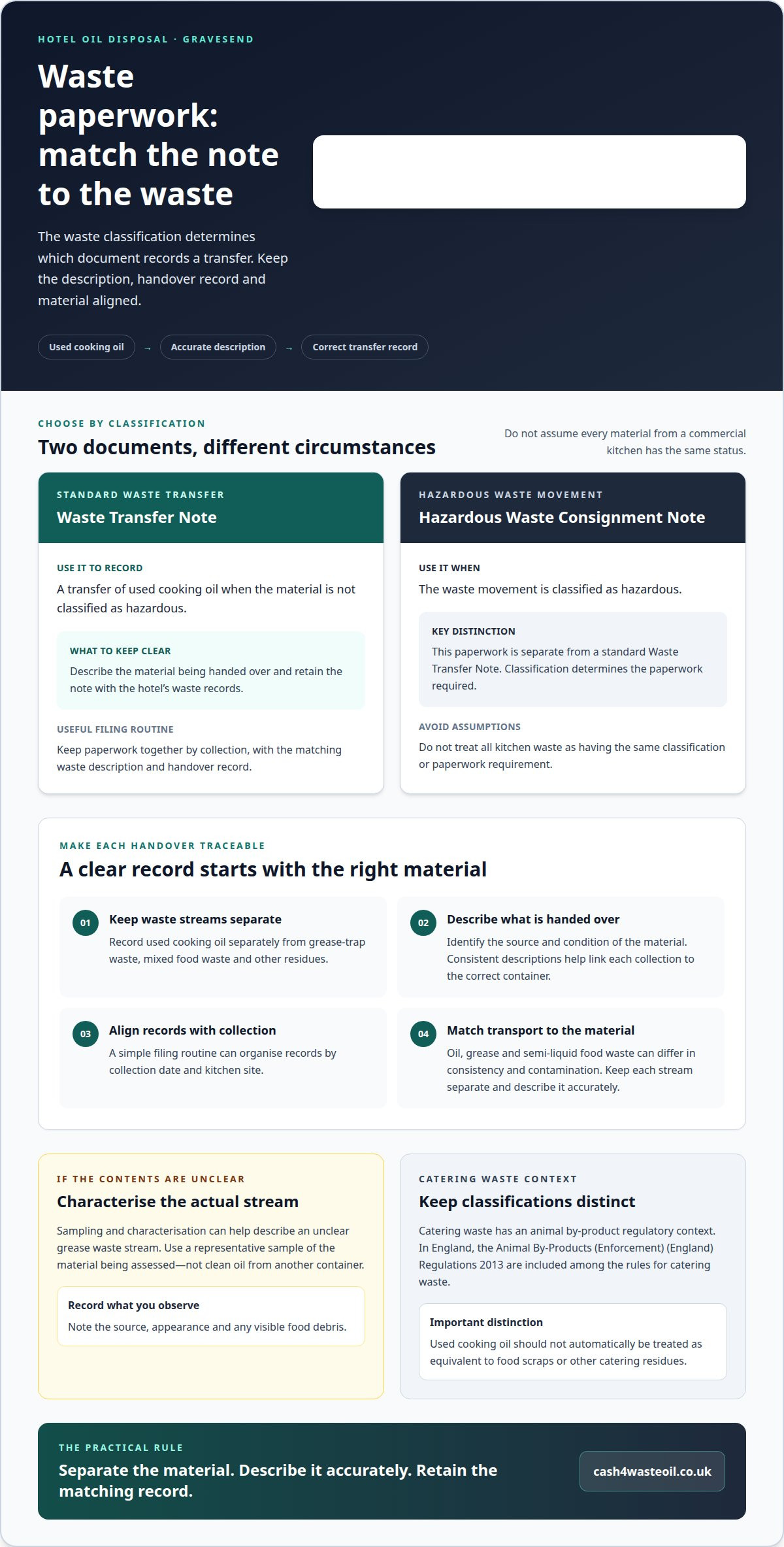
A clear paper trail helps a Gravesend hotel record where used cooking oil goes. Keep the Waste Transfer Note with the business’s waste records, and make sure it describes the transfer clearly. A consistent process helps kitchen managers connect each collection with the correct oil container and collection date.
At handover, ensure the waste description identifies the material being transferred. For example, distinguish used cooking oil from grease-trap waste or mixed food waste, and keep separate records for separate streams. This makes it easier to trace a collection without relying on memory.
Hazardous waste paperwork is separate from a standard Waste Transfer Note. Where a waste movement is classified as hazardous, it requires a Hazardous Waste Consignment Note. The waste classification determines the paperwork, so do not assume every material from a commercial kitchen has the same status.
Transport arrangements should match the material being moved. Used cooking oil, grease and semi-liquid food waste can differ in consistency and contamination. Keep each stream separate and describe it accurately at collection. Clear identification supports appropriate transport and helps prevent unsuitable material entering a recycling process.
Before collection, identify the source and condition of the material. A kitchen may store used cooking oil in one container and grease-rich residues in another. Keeping them separate gives the collector a clear description of the cooking oil being transferred and helps the hotel maintain accurate records.
If a grease waste stream’s contents are unclear, sampling and characterisation can help describe it. Take a representative sample of the material being assessed, rather than using clean oil from another container. Record its source, appearance and any visible food debris to help distinguish a consistent stream from mixed or contaminated waste.
Catering waste also has an animal by-product regulatory context. In England, the Animal By-Products (Enforcement) (England) Regulations 2013 are included among the rules for catering waste, according to The National Archives. This matters when a hotel is classifying kitchen waste: used cooking oil should not automatically be treated as equivalent to food scraps or other catering residues.
Keep paperwork together by collection, with the matching waste description and handover record. A hotel may use a simple filing routine organised by collection date and kitchen site. For used cooking oil transfers, Waste Transfer Notes provide a practical record to retain alongside the business’s waste documentation.
Separate records, accurate descriptions and suitable transport arrangements make grease waste handling easier to follow. Treat each material according to its character, and keep the paperwork aligned with the waste actually collected.
Recovery or disposal at an authorised site
Collection is only one stage in the journey of used cooking oil. Waste cooking oil from catering premises must be taken by the collector to an authorised site for recovery or disposal. For a Gravesend hotel, this means the oil’s route should continue beyond the kitchen and collection vehicle to an appropriate destination.
Recovery and disposal describe different outcomes. Recovery means processing waste so it can be used again or serve a further purpose. Disposal is the alternative route for waste that is not recovered. The right outcome depends on the oil’s condition and the receiving site’s processes. A clean, separately stored cooking-oil stream is easier to identify than oil mixed with food scraps, cleaning products or other waste.
A practical chain has several stages. Staff store used cooking oil separately; the collector removes it from the premises; then the oil goes to an authorised site for recovery or disposal. Keep those stages clear in the hotel’s waste records. For example, label a container as used cooking oil rather than simply “kitchen waste”. Accurate descriptions help distinguish the material as it moves from storage to its destination.
Contamination can affect how a waste stream is handled. A container holding cooking oil mixed with water, food debris or other substances may not be treated like a container of separated oil. Keep oil in its own suitable container and avoid adding unrelated waste. If a kitchen produces different liquid waste streams, separate them at the point where they arise. This gives the collector a clearer description of the material being transferred.
Hotels with several kitchens can apply the same approach across each premises. A central kitchen, restaurant kitchen and staff catering area may store oil in different locations, but clear labels and consistent records help staff identify each stream. Note which site produced the oil and where the collector removed it. This makes it easier to follow the waste movement if managers later review a collection record.
For day-to-day operations, agree where the oil is stored and how collection access works. A container placed behind a delivery area, for example, may need a clear route for removal. Keep the storage point accessible and distinct from food preparation and general rubbish areas. These simple arrangements help avoid confusion at handover and support an orderly journey to the authorised destination.
Do not treat the collection itself as proof of the final outcome. The essential point is that catering-premises cooking oil reaches an authorised site for recovery or disposal. Maintain a clear record of the waste type and transfer, and keep the collection process distinct from other kitchen waste movements. That gives the hotel a practical way to understand and document the oil’s route after it leaves the premises.
Environmental and regulatory handling
Pouring used cooking oil into drains or sewers can harm the environment and cause drainage problems. Keep it in a dedicated container and arrange commercial collection from the hotel premises.
Environmental risks of incorrect disposal
Oil poured onto outdoor ground can spread beyond the point where it was discarded. In a hotel setting, a spill near a yard drain may also enter the drainage system. Keep used cooking oil in a dedicated container and away from rainwater drains, food areas and general rubbish. Separate storage helps prevent accidental mixing with cleaning products or other kitchen waste.
Different oils need clear identification. A container of used cooking oil should not be confused with engine oil from a maintenance facility. Label each container by its contents and keep separate oil types apart. This straightforward step helps staff handle the waste consistently and supports an appropriate collection route.
Drainage risks of incorrect disposal
Pouring waste cooking oil down drains or sewers can result in potential prosecution. It can also create practical problems for hotel drainage, particularly when oil combines with other waste. Keep oil out of sinks, floor drains and outdoor gullies. Collect used oil in a suitable container instead, and make that process clear to kitchen staff.
For example, place a labelled oil container near the kitchen’s waste handling area, not beside a sink where staff might pour liquid away. Make the disposal step part of the kitchen’s closing routine. A clear instruction for staff reduces the risk of oil entering pipes or leaving the premises through an unsuitable route.
The Environmental Protection Act 1990 governs waste oil disposal obligations in the UK, according to The National Archives. The Waste (England and Wales) Regulations 2011, including the Waste Hierarchy, are also relevant to waste oil compliance, according to The National Archives. For a Gravesend hotel, these frameworks make correct handling and responsible waste management important parts of routine operations.
Storage needs attention too. According to the Environment Agency, in England, many business oil containers with a capacity of 201 litres or more are covered by specific storage rules, although exceptions apply. The container’s capacity and use matter when planning storage. Keep oil containers stable, clearly labelled and positioned to limit accidental damage or spills.
Build a simple handling routine around the hotel’s facilities. Identify where kitchen oil is stored, label the container, and keep it separate from engine oil or other waste. Tell staff which container is for cooking oil and where it belongs after use. These steps make the waste stream easier to manage and reduce the chance of disposal through drains.
Good environmental handling connects storage, staff practice and collection. A dedicated container, clear labels and a defined routine help keep cooking oil out of drains and separate from other waste. Review the arrangement when the kitchen layout or storage point changes, so staff across the premises know what to do.
Oil disposal information
Store used cooking oil in a separate, clearly labelled container, away from other waste. Keep it ready for collection, and do not pour it into a sink, drain or household engine-oil bank.
Household recycling centres’ engine-oil banks are not for a hotel’s commercial cooking oil. Keep the hotel’s used cooking oil separate and arrange collection for commercial premises.
Choose a container to suit the amount and type of oil your kitchen produces. A 20-litre drum can suit lower-volume sites, while a 205-litre barrel is described for regular volumes of used cooking oil. A 1,000-litre tank is intended for high-output sites producing larger waste-oil volumes.
Keep each oil type in a separate, labelled container. Do not combine cooking oil with engine oil, hydraulic oil or lubricants. Clear labels help staff identify the contents and prevent the wrong material entering a collection stream.
Position the container where kitchen staff can use it safely, without obstructing food preparation or access routes. Use the same designated point each shift and make the disposal step clear to everyone handling used oil. A consistent routine helps reduce spills and accidental mixing with food scraps or cleaning materials.
Before collection, check that the container is closed and its label is readable. Tell the collection service what oil it contains and where it can be accessed. If the hotel has several kitchens, identify each storage point so the correct container is collected.
Choose a suitable container based on the amount of oil produced, collection arrangements and available storage space. A small kitchen may need a different setup from a hotel with a high-output restaurant. Avoid transferring oil into an unlabelled vessel that staff could mistake for another liquid.
Use an authorised collector for commercial used cooking oil. Keep the oil separate until handover, and retain the transfer paperwork with the hotel’s waste records. These steps create a clear distinction between commercial waste and household recycling, while helping staff follow one repeatable disposal process.
For hotels that need a dedicated route for used cooking oil, arrange used cooking oil collection for the commercial kitchen. Keep the collection details aligned with the oil type and storage point, so the handover matches the waste being removed.
Cash 4 Waste Oil
Cash 4 Waste Oil helps Gravesend hotels manage commercial used cooking oil collection and its handover paperwork. Its service includes Used Cooking Oil Collection and a Waste Transfer Note, giving your business a record of the waste transfer. Cash payments for waste oil are also available.
It’s a practical next step if your hotel needs a regular way to remove used kitchen oil, or an organised collection when storage is filling. Keep the oil separate from other waste and share the collection location and access details when arranging the service. That helps connect the collection with the right kitchen and waste stream.
For help arranging used cooking oil collection for your hotel, contact Cash 4 Waste Oil.
Make oil handling part of the kitchen routine
For hotel oil disposal in Gravesend, make responsibility clear within the business. Assign a kitchen lead to oversee the oil storage point and include the disposal process in staff handovers. This helps new team members know where used oil belongs and who manages the arrangement.
Review the routine whenever the kitchen layout, menu or staffing changes. A new service area or different cooking pattern can affect where oil is stored and how staff move it safely. Keeping the process aligned with daily operations helps prevent uncertainty during busy shifts.
Cash 4 Waste Oil can help hotels organise the next step for their used cooking oil. Discuss your hotel’s collection arrangements and put a clear routine in place for your kitchen team.
Frequently Asked Questions
How do businesses dispose of waste oil legally in the UK?
Businesses should keep waste oil separate, arrange collection through an authorised waste carrier and ensure it reaches an authorised recovery or disposal site. For example, a hotel kitchen should keep used cooking oil apart from engine oil and food waste. Record the handover with the relevant transfer paperwork. If the oil movement is classified as hazardous, use a Hazardous Waste Consignment Note for that movement.
What regulations cover waste oil disposal?
Relevant rules include the Environmental Protection Act 1990 and the Waste (England and Wales) Regulations 2011, including the Waste Hierarchy, according to The National Archives. Catering waste in England also comes under the Animal By-Products (Enforcement) (England) Regulations 2013. Hazardous waste movements have separate paperwork requirements. Which provisions apply depends on the waste type, its classification and how it is stored or moved.
What are the prices for commercial used cooking oil collection in Gravesend?
Cash 4 Waste Oil provides commercial used cooking oil collection free of charge. Collection pricing is therefore not an additional cost for this service. If you’re asking about payment for the oil itself, the amount depends on the oil’s volume and condition. Request a free quote for your hotel’s particular collection, and include details of the oil type and how it is stored.
Do oil collectors pay hotels for waste cooking oil, and how much?
Yes, Cash 4 Waste Oil pays businesses cash on collection for used cooking oil. The amount depends on the volume and condition of the oil, so a fixed figure would not represent every hotel’s collection. A kitchen producing clean, separately stored oil has a different collection profile from one with mixed or contaminated material. Request a free quote based on the waste your hotel generates.
What types of cooking oil and fats do hotel oil disposal services accept?
Cash 4 Waste Oil collects used cooking oil, vegetable oil and animal fats from commercial food-service premises. A hotel can separate these food-grade waste oils from engine oil, industrial lubricants and general kitchen rubbish. For example, keep fryer oil in its own labelled container rather than combining it with maintenance waste. Clear separation helps identify the material for the collection and its onward processing.
How often can hotels arrange used cooking oil collection in Gravesend?
Cash 4 Waste Oil offers flexible weekly, fortnightly or monthly collection schedules. The suitable interval depends on how quickly the hotel produces used oil, its storage capacity and the kitchen’s trading pattern. A hotel with steady restaurant service might plan around its usual output, while changes in menus or occupancy can affect how quickly containers fill. Agree a schedule that fits the operation.
What UK rules apply to storing and disposing of hotel cooking oil waste?
Store cooking oil securely, keep it separate from other waste and arrange collection for recovery or disposal. According to the Environment Agency, in England, many business oil containers with a capacity of 201 litres or more are covered by specific storage rules, although exceptions apply. The container’s capacity and use matter. Keep cooking oil distinct from engine oil and never pour it into drains.
What waste transfer records or duty-of-care documents must hotels keep for used cooking oil?
Keep a Waste Transfer Note for the transfer of commercial used cooking oil, with details that identify the waste and collection. Cash 4 Waste Oil provides a Waste Transfer Note after every collection. If a particular oil movement is hazardous, it requires a Hazardous Waste Consignment Note. A hotel can file each record against the relevant kitchen or premises, making it easier to retrieve paperwork for an individual collection.