How to Train Staff to Dispose of Oil and Clean Up Spills Safely
Hot cooking oil can burn staff, spread across floors and create drain and waste risks if handled carelessly. Knowing how to train staff on correct oil disposal means teaching a clear routine: let oil cool, transfer it carefully into a suitable, sealed and labelled container, keep it away from drains and arrange proper collection. Include spill response in the training, not just everyday disposal.
In a busy kitchen, staff need practical instructions they can follow during service and at closing time. Pouring oil down a sink can contribute to blocked pipes and fatbergs, while spills can put colleagues at risk. This guide explains how to prevent these problems and build safe habits across your team.
You’ll learn how to transfer hot oil safely, store used cooking oil, brief staff on spill clean-up and keep disposal procedures clear. The focus is on simple steps your team can practise, so everyone knows what to do with oil before, during and after a spill.
Key Takeaways
- Teach staff a consistent routine for cooling, transferring and storing used cooking oil in a suitable, sealed container.
- Show employees how to keep oil away from sinks, drains and general catering waste to reduce blockages and pollution risks.
- Make spill response practical: demonstrate how to contain a spill, use absorbent materials and dispose of contaminated clean-up waste safely.
- Practise safe hot-oil transfers, including preparing the receiving container and keeping people clear of the route.
- Set clear responsibilities for storage checks, scheduled collections and keeping waste transfer paperwork.
Training staff on oil handling, storage and disposal
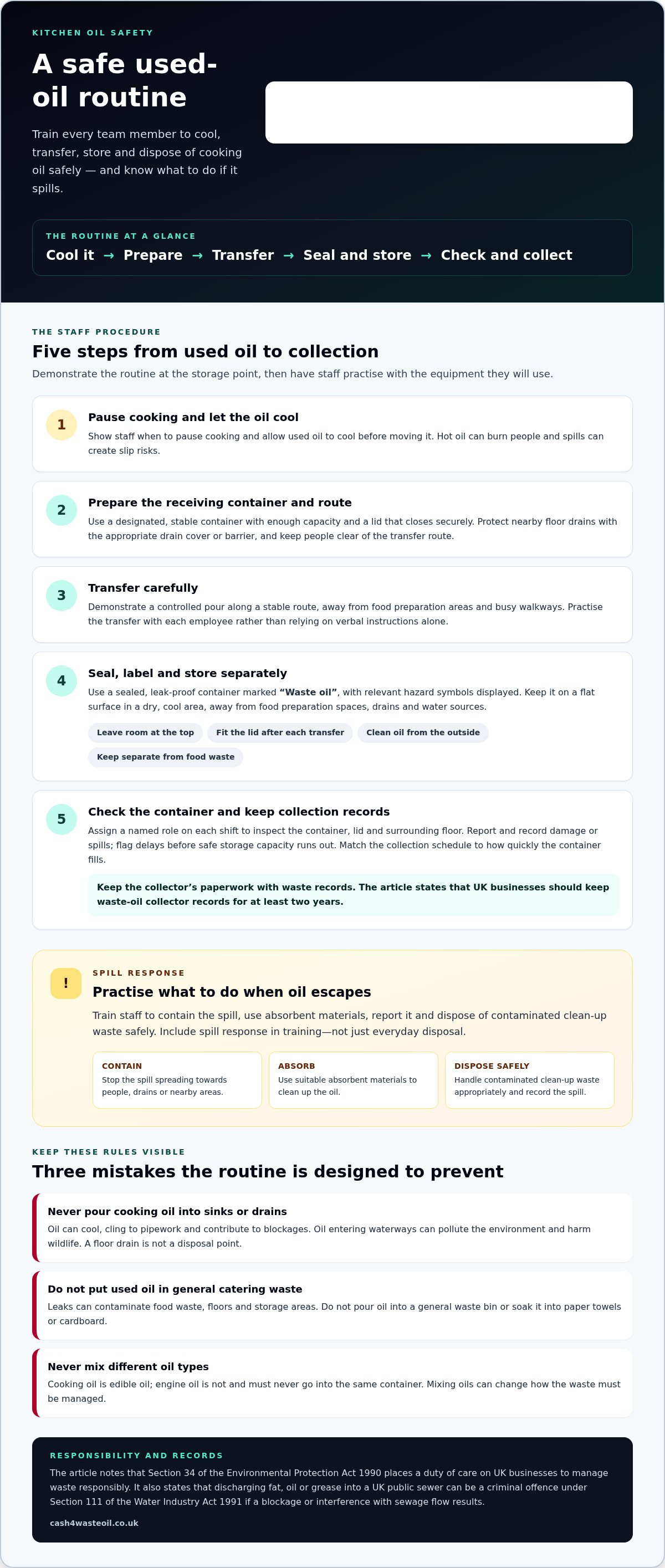
Give every kitchen employee the same written routine for handling cooking oil, from cooling and transfer to storage and collection. Demonstrate the procedure at the actual storage point, then ask staff to explain each step back.
- Train staff to follow the full oil-handling sequence. Show them where to pause cooking, let used oil cool and prepare the receiving container before moving anything. Demonstrate a controlled transfer along a stable route that avoids food preparation areas and busy walkways. Have each employee practise with the equipment they will use, rather than relying on verbal instructions alone.
-
Choose secure oil drains and storage containers
Keep oil out of sinks and drains, and show staff which drain covers or barriers protect nearby floor drains during transfer. Choose a designated, stable storage container with a secure lid and enough capacity for the kitchen’s usual output. Avoid cracked vessels, single-use plastic bottles and containers that staff cannot close securely after pouring.
-
Store waste oil in sealed, spill-proof containers
Direct staff to use a sealed, leak-proof container marked “Waste oil”, with relevant hazard symbols displayed. Keep it separate from food waste and other waste oils, on a flat surface in a dry, cool storage area away from food preparation spaces, drains and water sources. Leave room at the top, fit the lid after each transfer and clean the outside if oil splashes onto it.
-
Recognise storage and delayed-disposal risks
Teach employees to report a loose lid, damaged container, leak or rising oil level before it becomes a bigger problem. Overfilled or poorly sealed containers can spill into storage areas, creating slip risks and contaminating nearby surfaces. Set a collection schedule to match how quickly the kitchen fills its container, and assign someone to flag delays before safe storage capacity runs out.
- Make checks and records part of the routine. Assign a named role on each shift to inspect containers, lids and the surrounding floor, then record any damage or spill for follow-up. Keep the collector’s paperwork with the waste records; according to the Environment Agency, UK businesses should keep records provided by the waste oil collector for at least two years. Use a handover note so the next shift knows the container’s condition and collection status.
Risks of putting cooking oil in general catering waste
Keep waste cooking oil out of general catering waste, sinks and drains. Contaminated paper, cardboard or mixed rubbish can create handling problems and make safe recovery harder.
- Train staff to separate oil at the point of disposal. Never pour it into a general waste bin or soak it into paper towels or cardboard. Leaks can contaminate food waste, floors and storage areas, while oily absorbents need appropriate disposal. Show employees the designated oil container and make its location clear to every shift.
- Explain the legal duty behind the procedure. Section 34 of the Environmental Protection Act 1990 places a duty of care on UK businesses to manage waste responsibly from production to final disposal, according to UK Legislation. This means the business remains responsible for waste handling through its disposal route. Train staff to keep oil separate, use an authorised waste oil collector and retain collection paperwork.
- Teach staff that disposal methods depend on the oil type and location. Cooking oil is edible oil; engine oil is not and must never go into the same container. In certain regions, waste oils other than edible oil are classed as hazardous or special waste. Staff should never mix oil types, as mixing can change how the waste must be managed.
- Build a local-authority check into the waste procedure. Food businesses must store and dispose of food waste and rubbish hygienically and in an environmentally friendly way, in line with legislation. Local requirements can affect how particular food waste is collected, so assign a manager to confirm the relevant arrangements with the local authority. Keep the instructions with the site’s waste records, not just in a staff member’s memory.
- Use a short disposal checklist at the waste station. Include the oil type, the correct labelled container, a secure lid, spill reporting, the collection process and where paperwork is filed. Ask staff to follow it during induction, then practise the steps during a shift handover. For a dedicated route for used cooking oil, arrange a used cooking oil collection rather than placing it in general catering waste.
Environmental and hygiene risks of pouring oil down drains
Cooking oil can cool, cling to pipework and contribute to blockages. Oil entering waterways can also pollute the environment and harm wildlife. Putting it in general waste risks leaks and contamination, so collect it separately for appropriate waste management.
- Train staff to stop oil before it reaches a drain. Place a clear instruction beside sinks: never tip cooking oil, pan drippings or greasy liquids into the basin. Even warm oil can cool further along pipework, cling to surfaces and combine with other fats, oils and grease. Explain that a floor drain is not a disposal point either.
Show staff the designated container and route used oil there after it has cooled. If a drain becomes blocked or sewage flow is interfered with, discharging fat, oil or grease into a UK public sewer can be a criminal offence under Section 111 of the Water Industry Act 1991.
- Explain what happens after oil enters the drainage system. Fats, oils and grease can build up inside pipes, restrict flow and contribute to blockages. The UK has approximately 300,000 sewer blockages a year. A London fatberg found in 2017 measured 250 metres long and weighed 130 tonnes.
Use this example to make the risk tangible during staff induction. A grease trap or Grease Recovery Unit can capture fats, oils and grease from wastewater before they cause blockages, but it does not dispose of oil directly. Staff must still collect used cooking oil separately.
- Keep oil out of general waste as well as drains. Don’t soak it into cardboard or paper towels and put those materials into a catering waste bin. Oil can leak from waste, contaminate other rubbish and create extra clean-up work. Show staff how to handle oil-soaked absorbents after a spill, following the site’s waste procedure.
Keep food preparation areas hygienic by removing waste promptly. Oil spilled near bins can spread onto floors, containers and nearby equipment. Train staff to report spills, protect the area from foot traffic and follow the designated clean-up process, rather than hiding the mess in general waste.
- Make prevention part of daily waste management. Keep the oil collection point easy to reach, label it clearly and show new starters the route from each fryer. Assign a shift lead to check that oil is collected rather than poured away. Review the process when staff identify a confusing step or a spill exposes a gap.
Practise the routine with a clean, empty container before busy service begins. Ask each employee to point out the nearest drain, the correct oil storage point and what to do after an accidental spill. This brief walk-through turns drain protection into a practical kitchen habit.
Employee training on disposal and spill cleanup
Train staff through demonstration, supervised practice and recorded instruction. Cover routine waste disposal and spill response so every employee knows their responsibilities before handling used oil.
- Demonstrate the complete disposal routine at the kitchen’s waste station. Show staff how to identify used cooking oil, transfer it into its designated container and secure the lid afterwards. Explain that oil must stay separate from other waste streams. Ask each employee to repeat the process, including what to do if the container is damaged or nearly full.
- Practise spill response using the actual spill kit and storage-area layout. First, stop nearby work and keep colleagues away from the affected floor. Prevent oil from reaching drains where it is safe to do so. Use oil-appropriate absorbent pads or dry absorbent, following the kit instructions. Don’t wash oil into a sink or floor drain during clean-up.
- Show staff how to collect and dispose of contaminated clean-up materials. Place used absorbents in the designated waste container, following the site’s waste disposal procedure. Don’t leave oily pads beside food waste or in an open bin. Include handwashing after handling waste or cleaning around waste-storage areas, then restore the spill kit for the next incident.
- Define who does what during a larger spill. Train the first employee on scene to alert the shift lead, who can organise containment and notify the appropriate site contact. Staff should contain a larger spill as far as safely possible, without walking through it or spreading oil. Practise a brief verbal handover describing the spill location, affected area and actions taken.
- Document training and review it after incidents. Record which disposal and clean-up tasks each employee has practised, then repeat demonstrations when procedures or equipment change. Sandy City’s used-oil procedures call for documented employee training and proper disposal of contaminated clean-up materials. Add a simple incident record covering the spill, response, absorbents used and follow-up needed.
- Connect careful separation with recycling and compliance. Explain that keeping cooking oil apart from general waste supports suitable recovery and prevents contamination. Ask staff to report a missed collection or a full container before oil is left unsecured. During a shift handover, confirm the collection status, container condition and any outstanding clean-up task.
Training staff to transfer hot oil safely
Hot waste cooking oil can cause burns, so train staff to follow a set procedure and use suitable protective gear. Practise the route and transfer with the equipment used in your kitchen.
- Prepare the destination before moving oil. Check that the receiving container is stable, suitable for hot oil and positioned on a level surface. Clear the route of obstacles, wet patches and other staff. Keep the container close to the fryer where practical, so employees don’t carry hot oil across a busy kitchen.
Show each employee how to check the container opening and lid before starting. A loose lid, cracked vessel or unstable base can turn a routine transfer into a spill. Stop and replace unsuitable equipment before moving oil.
- Use protective gear and a controlled transfer method. Demonstrate the protective equipment provided for the task, such as heat-resistant gloves and an apron. Make sure staff understand how to wear it correctly and keep exposed skin away from splashes. Don’t rush or pour from a position that forces an employee to reach across hot surfaces.
Show staff how to keep the container steady and pour slowly, using an approved utensil or transfer equipment. Explain when a task needs another trained colleague, especially if a large vessel is difficult to control alone.
- Teach employees to judge whether oil is ready to move. If the kitchen’s procedure requires cooling first, wait until the oil has cooled sufficiently for the designated handling method. Never ask staff to carry an open pan of hot oil through a service area. Keep customers and colleagues away from the transfer route until the task is complete.
Practise the sequence at the fryer: follow the site’s safe transfer procedure, prepare the container, clear the route and move deliberately. Staff should stop if the oil is splashing or the container shifts, then secure the area before continuing.
- Show staff how to respond if a transfer goes wrong. If oil spills, stop moving, warn nearby colleagues and keep people away from the affected floor. Don’t try to catch a falling container or wipe hot oil by hand. Follow the kitchen’s spill response procedure and use suitable absorbent materials once it is safe to do so.
Include a short practice scenario, such as a container tipping beside the fryer. Ask staff to identify who raises the alarm, who manages the area and where the spill kit is kept.
- Check competence before assigning the task independently. Ask the employee to demonstrate each stage, explain the main burn and spill risks, and identify the safe storage point. Record completed training and repeat the demonstration when equipment or procedures change. A shift lead can observe transfers and correct unsafe habits promptly.
After oil has cooled and been stored securely, arrange its documented collection as part of the kitchen’s waste routine. Arrange a used-oil collection with Waste Transfer Notes to keep the handover record with your waste paperwork.
Cash 4 Waste Oil: Used Cooking Oil Collection
Cash 4 Waste Oil provides used cooking oil collection for restaurants, pubs, hotels and other commercial kitchens in London, Kent and Surrey. Turn to the service when your kitchen needs a clear collection route for stored cooking oil, rather than relying on general waste disposal. The collection includes a Waste Transfer Note, giving your business a record of the oil handover.
Cash payments for waste oil are also available. Keep your staff procedure simple: cool and store oil safely, then arrange collection and retain the paperwork with your waste records. This connects safe kitchen handling with a documented disposal process.
To discuss used cooking oil collection for your commercial kitchen, contact Cash 4 Waste Oil.
Make the next shift the start of safer habits
The question of how to train staff on correct oil disposal is best answered with routines your team can repeat, even during a busy service. Choose someone to lead the next shift briefing. Ask staff to practise disposal and spill procedures, then invite them to flag any confusing steps. Use their feedback to keep instructions practical and consistent.
Once your kitchen’s routine is clear, make sure collected cooking oil has a documented route out of the business. Cash 4 Waste Oil offers Used Cooking Oil Collection, Waste Transfer Notes and Cash Payments for Waste Oil. These services can support commercial kitchens seeking a straightforward collection arrangement alongside their staff procedures.
Contact Cash 4 Waste Oil to discuss used cooking oil collection for your business. Keep building good habits, one shift at a time.
Frequently Asked Questions
What can go wrong with improper disposal?
Oil can block pipework, pollute waterways, contaminate other waste and create slip hazards. For example, a small amount tipped into a sink can cool inside pipes and combine with grease, restricting drainage. Oil poured onto the ground can reach nearby water sources. If oil leaks from a general waste bag, it may also soil floors or other rubbish, making clean-up and waste handling harder.
Why Is Disposal Important?
Correct disposal helps protect staff, drainage systems and the environment, while supporting legal compliance. Section 34 of the Environmental Protection Act 1990 places a duty of care on UK businesses to manage waste responsibly from production to final disposal, according to UK Legislation. A documented waste route also helps the business show what happened to its used oil, rather than leaving staff to make ad hoc disposal decisions.
What are the UK rules for disposing of used cooking oil from commercial kitchens?
Commercial kitchens should keep used cooking oil separate and arrange collection through an authorised waste route. Section 34 of the Environmental Protection Act 1990 sets out businesses’ duty of care for waste. In England and Wales, the Waste (England and Wales) Regulations 2011 require businesses to follow the waste hierarchy, prioritising reuse or recycling before disposal. Keep the collector’s records for at least two years, according to the Environment Agency.
How should staff separate, cool and store used cooking oil safely?
Staff should separate cooking oil from food scraps, cleaning liquids and other oils at the point of use. Let it cool before transferring it, following the kitchen’s safe handling procedure. For example, a closing-shift handover can record which fryer has been emptied and whether the receiving container is ready. Keep oil away from food preparation areas and mark the storage point clearly, so new starters can identify the correct route.
What containers are suitable for collecting and storing waste cooking oil?
Use a sturdy, heat-resistant, leak-proof container with a fitted lid, suitable for the oil’s condition when transferred. Mark it clearly for waste cooking oil and keep it upright on a stable surface. Don’t reuse a cracked vessel or rely on a single-use plastic bottle, which may leak during handling. In a busy kitchen, make sure the container opening suits the transfer method and staff can close it securely after use.
What training should kitchen staff receive on oil disposal and spill response?
Train each employee to identify the correct oil container, follow the kitchen’s cooling and transfer procedure, and report leaks or spills promptly. A practical way to train staff on correct oil disposal is to demonstrate the routine at the actual storage point, then ask them to explain it back. Include a spill-kit demonstration, safe area control, contaminated absorbent disposal and handwashing. Record training and revisit it after an incident or procedure change.