Recycling Commercial Cooking Oil into Biodiesel: Costs and Carbon Savings
Recycling commercial cooking oil into biodiesel starts with removing food particles and other solids, then preparing the cleaned oil for conversion. In a refinery, transesterification converts the oil into biodiesel and glycerin. This gives used oil another purpose as a transport fuel instead of treating it as waste to discard.
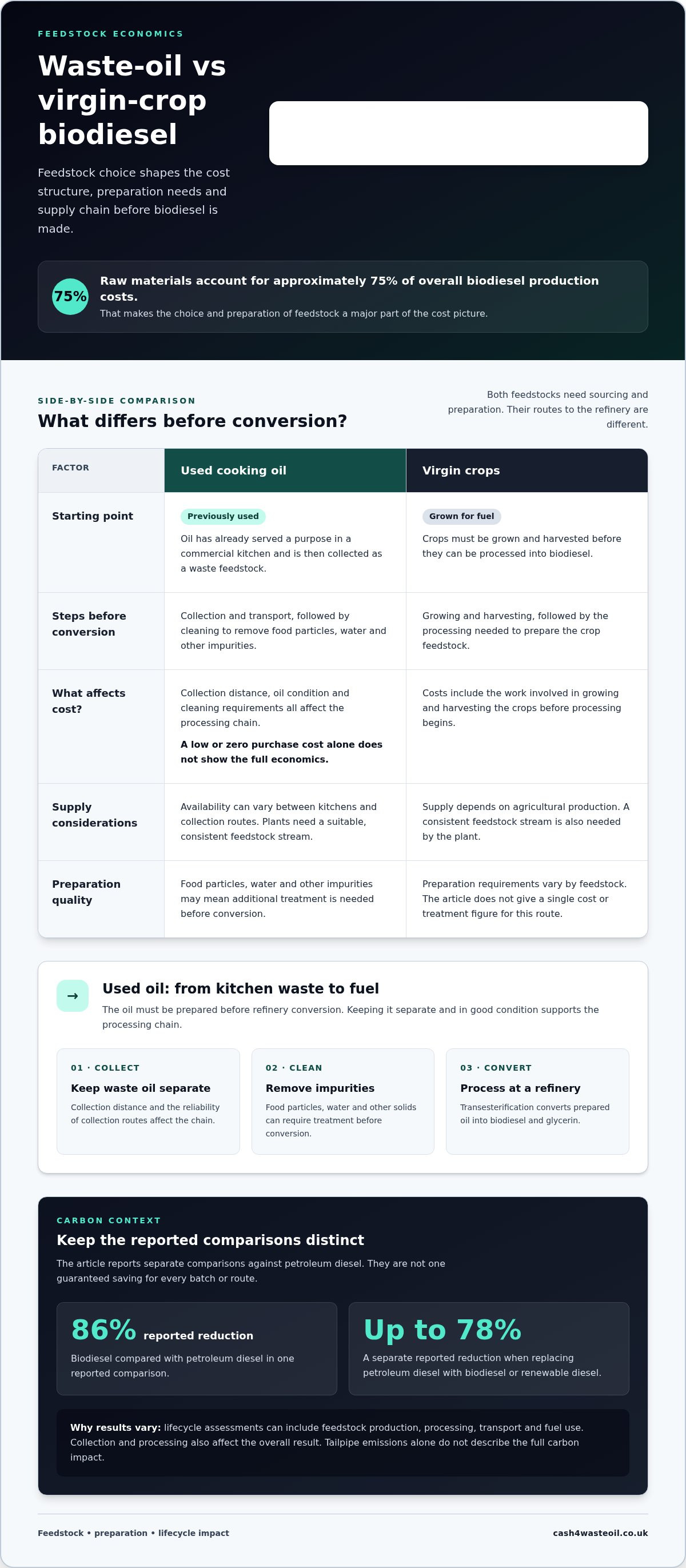
For commercial kitchens, the process matters for two reasons: what happens to the oil after collection, and how its economics compare with biodiesel made from virgin crops. Raw materials account for approximately 75% of overall biodiesel production costs, so the choice of feedstock can make a substantial difference to the cost picture. Biodiesel can also reduce greenhouse gas emissions by 86% compared with petroleum diesel.
This article explains how used cooking oil is assessed, filtered and prepared for processing. It compares waste-oil and virgin-crop biodiesel, including their costs and carbon impacts, and explains why pouring oil down drains or disposing of it improperly can cause environmental harm. For UK commercial kitchens, it also outlines what responsible collection involves.
Key Takeaways
- See how used cooking oil is screened, cleaned and prepared before it can be converted into biodiesel.
- Understand why feedstock matters: raw materials account for approximately 75% of overall biodiesel production costs.
- Compare the reported carbon savings from biodiesel with petroleum diesel and learn what affects the environmental benefit.
- Find out how improper oil disposal can harm drains and the wider environment, and why keeping waste oil separate matters.
- Learn why commercial waste cooking oil should be collected by a registered and licensed carrier for correct recycling or disposal.
Carbon dioxide emissions reductions
Turning used cooking oil into biodiesel can reduce greenhouse gas emissions compared with petroleum diesel. One reported comparison puts the reduction at 86%. Another states that replacing petroleum diesel with biodiesel or renewable diesel can reduce emissions by up to 78%. These figures describe separate comparisons, not a single guaranteed saving for every batch of fuel.
Why do the percentages differ? Results depend on the fuels being compared and which emissions the calculation includes. A lifecycle assessment looks beyond a vehicle’s exhaust, accounting for factors such as feedstock production, processing, transport and fuel use. Waste oil has already served a purpose in a kitchen, so converting it into fuel gives it another use. However, the energy and transport involved in collection and processing still affect the overall result.
It helps to distinguish tailpipe emissions from lifecycle emissions. Burning biodiesel still releases carbon dioxide from a vehicle’s exhaust. A lifecycle comparison also considers the wider fuel chain, from the original feedstock to the steps between a commercial kitchen and the refinery. This matters when comparing waste-oil biodiesel with petroleum diesel or biodiesel made from virgin crops. Exhaust figures alone cannot describe the full carbon impact.
A project in Bali provides a practical example of reported savings at project scale. It reduces carbon dioxide emissions by 1,500 tonnes per year. That figure illustrates the potential of collecting used oil and converting it into fuel, but it is specific to that project. It is not a UK-wide emissions estimate or a saving that can be applied directly to an individual restaurant.
For a UK kitchen, the practical chain is simple: keep waste oil separate, arrange collection for recycling, then process it into biodiesel. Each step supports reuse, while unnecessary transport or processing can add emissions. Oil quality matters too, because the feedstock must be prepared for conversion. These details help explain why results vary between feedstocks and production routes.
When reviewing a carbon claim, look for the comparison being made. Is the benchmark petroleum diesel, or another fuel? Does the figure cover lifecycle emissions or only a particular stage? The reported 86% reduction and the “up to 78%” figure should not be combined or treated as interchangeable. Their value is in showing that the comparison method matters as much as the headline percentage.
For businesses recycling commercial cooking oil into biodiesel, the potential carbon benefit comes from using waste as a feedstock in place of some fossil fuel. The precise reduction depends on how the oil is collected, processed and used. A clear lifecycle comparison shows these factors and helps kitchens understand what a reported emissions saving represents.
Economic comparison with virgin-crop biodiesel
Waste-oil biodiesel uses a discarded feedstock; virgin-crop biodiesel starts with crops grown for fuel. Commercial kitchens should arrange for waste cooking oil to be collected and handled responsibly. Plant operators also need controls for hot oil and processing chemicals.
Waste oil and virgin-crop economics
Waste-oil and virgin-crop economics compare the cost of sourcing and preparing each feedstock for biodiesel production. Raw materials account for approximately 75% of overall biodiesel production costs, so feedstock choice has a major influence on the cost structure.
Virgin crops must be grown and harvested before processing. Waste oil has already been used in a kitchen, but it still needs to be collected, transported and cleaned, all of which bring costs. Its condition affects preparation too: food particles, water and other impurities may require additional treatment before conversion.
Supply matters as well. A biodiesel plant needs a suitable, consistent feedstock stream. Used cooking oil availability can vary between kitchens and collection routes, while crop-based supply depends on agricultural production. Animal fats can also be used as feedstock, with their own sourcing and processing requirements. Each route therefore has different costs before conversion begins.
Cost, emissions and performance against diesel
This comparison looks at fuel cost, lifecycle emissions and how the finished biodiesel performs against petroleum diesel. Waste-oil biodiesel can reduce greenhouse gas emissions by 86% compared with petroleum diesel, while cost reflects feedstock, collection and processing. Performance depends on the finished fuel and its intended use.
There is no single cost figure that applies to all these fuels. Petroleum diesel prices change with the market, while biodiesel production costs depend on the feedstock and the work required to prepare it. For waste oil, collection distance, oil condition and cleaning requirements all affect the processing chain. A low or zero purchase cost for the feedstock alone does not show the full economics.
Performance also requires a like-for-like comparison. Relevant details include the finished fuel’s quality and whether it is used neat or blended with petroleum diesel. A carbon saving does not establish that two fuels perform identically in every engine or operating condition. Assess emissions, fuel cost and operational suitability as separate measures when considering a switch.
For kitchen operators, the practical economic step is to keep waste oil cleanly separated and available for collection. That helps preserve feedstock quality and supports efficient processing. Businesses arranging commercial waste-oil collection can consider how reliable handling contributes to the wider recycling chain.
Environmental impacts of improper oil disposal
Pouring fryer oil into a kitchen sink can cause problems well beyond the plughole. As it cools, grease can stick to pipe walls and trap food scraps. Repeated disposal may restrict flow and contribute to blockages in private drains and public sewers. Restaurants that pour oil down the sink also lose a reusable material that could otherwise be recycled.
In sewers, fats, oils and grease can combine with other waste to form solid deposits. These deposits obstruct wastewater flows and may contribute to sewer overflows. If untreated wastewater reaches rivers or streams, it can affect water quality and aquatic habitats. The impact depends on where a blockage occurs and whether wastewater escapes into the surrounding environment.
Oil spilled outdoors creates a different risk. For example, a leaking container in a kitchen’s service yard can spread oil across paving and into nearby soil or surface-water drains. A film of oil on water can interfere with the movement of oxygen between air and water. This can put pressure on aquatic organisms, particularly if a spill reaches a small pond or stream.
Improper disposal also wastes the resources already used to produce the original cooking oil. Producing and transporting virgin vegetable oil and animal fats requires resources. Used oil still has value as a biodiesel feedstock. Sending it to a suitable recycler can displace some demand for fossil fuel, while dumping it wastes that opportunity and creates avoidable pollution.
Commercial kitchens can reduce these risks through practical handling:
- Let used oil cool before handling it, reducing the risk of splashes and burns.
- Keep it in a suitable, closed container rather than pouring it into sinks, toilets or outdoor drains.
- Keep food scraps and cleaning liquids out of the stored oil where practical, helping preserve its value for processing.
- Arrange collection so stored oil does not overflow or leak around the kitchen’s waste area.
For example, a restaurant can empty fryers into a dedicated container rather than sending oil through the sink and drain system. Staff can check the waste area routinely for loose caps or spills. If oil escapes, contain it promptly and keep it from reaching a drain. These practical steps reduce the chance of a local spill becoming a wider environmental problem.
Recycling commercial cooking oil into biodiesel turns a difficult waste stream into a useful fuel feedstock. Keeping oil separate from wastewater is the first practical step. It protects drains, reduces pollution risks and preserves the material for reuse instead of allowing it to contaminate land or water.
Filtering and preparing oil for processing
Preparing used cooking oil means checking its condition, removing contaminants and making it suitable for conversion. Processing also involves health, fire and environmental risks: hot oil can cause burns, chemicals require careful handling, and leaks or spills can contaminate the surroundings. Controlled equipment, safe handling procedures and spill prevention help manage these hazards.
First, processors assess and grade the collected oil. Its colour and clarity provide practical clues about its condition and cleaning requirements. Oil containing food scraps, water or other solids needs preparation before it can enter a biodiesel reaction. In the kitchen, keeping waste oil separate from cleaning liquids and food waste helps preserve its quality before collection.
At a depot, the oil can pass through a 200-micron screen to remove larger particles. This rapid filtration can prepare used oil for processing in a few hours. Another preparation method heats oil in a tank, helping smaller debris and impurities settle at the bottom. Operators can then remove the settled material before the oil moves through a larger filtration system.
At a refinery, the oil is filtered until it meets the specifications needed for biofuel production. The aim is not simply to make the oil look clean. Food residue and other unwanted material can affect processing, so filtration helps create a more consistent feedstock. Preparation depends on oil quality, meaning clearer oil and heavily contaminated oil may need different treatment.
After filtration, a refinery converts suitable oil through transesterification. This reaction changes fats and oils into biodiesel and glycerin, a coproduct. Processing plants may heat filtered oil to roughly 70 °C during production. The operating conditions depend on the feedstock and process, so the temperature is part of a controlled refinery operation, not a kitchen procedure.
Free fatty acid content is another important quality measure. Used oil above 2 wt.% free fatty acid typically needs an initial esterification process. This helps prevent soap formation when an alkali catalyst is used. The extra treatment shows why assessing feedstock matters before the main biodiesel reaction begins.
In practice, preparation moves from assessment to screening, settling, finer filtration and refinery processing. Each stage addresses a different issue, such as visible solids, smaller impurities or chemical properties that affect conversion. The aim is to produce feedstock that meets refinery specifications, so the subsequent reaction can make biodiesel rather than leave valuable waste oil unprocessed.
What UK regulations apply to collecting and recycling commercial waste cooking oil?
For commercial waste cooking oil in the UK, the practical rule is to use a registered and licensed carrier so the oil can be recycled or disposed of correctly. This applies whether a restaurant’s oil is destined for biodiesel processing or another suitable route. Responsible collection keeps the waste in a documented chain instead of sending it down drains or into general waste.
Start by separating used oil from other kitchen waste. Store it in a suitable, secure container and keep the collection area orderly to reduce spills and mixing with other waste. When the oil is collected, a Waste Transfer Note records the transfer. Keep this document with your business records so staff can trace what was handed over and to whom.
The paperwork matters because collection involves more than a vehicle taking oil away. The Waste Transfer Note identifies the waste and records its transfer between the business and carrier. Check that the collection details match the oil leaving your premises. For example, if a restaurant’s storage container is emptied, the record should relate to that collection, not an unrelated waste stream.
Build these practical checks into your kitchen routine:
- Keep used cooking oil separate from food scraps, cleaning liquids and other waste.
- Use a secure container and keep its lid closed between collections.
- Record each transfer with the relevant Waste Transfer Note.
- Make sure the collector is registered and licensed to carry the waste.
These steps connect safe handling with proper recycling. A closed container reduces the risk of spills, while separating the oil keeps it more suitable for processing. A transfer record gives the business a clear account of each collection. Together, these measures make it easier to manage waste oil consistently across shifts, sites and staff handovers.
Payment for waste oil does not replace proper documentation. The collection must still be handled correctly, and the transfer recorded. Similarly, a document alone does not make an unsuitable disposal route acceptable. Use a registered and licensed carrier, record the transfer, and ensure the oil goes for appropriate recycling or disposal.
For a commercial kitchen arranging regular waste-oil handling, keep the collection process simple: store the oil securely, have the transfer recorded, and retain the Waste Transfer Note. Arrange commercial cooking oil collection as part of that documented waste-management routine.
Cash 4 Waste Oil: Used Cooking Oil Collection
Cash 4 Waste Oil collects used cooking oil from restaurants, pubs, hotels and other commercial kitchens across London, Kent and Surrey. If your kitchen needs a responsible route for its waste oil, the collection service includes a Waste Transfer Note to record the transfer. Cash payments are made on the spot when oil is collected.
The collection service is free, and collections are fully licensed and Environment Agency registered. This gives commercial kitchens a practical way to keep used oil out of drains and support its proper recycling or disposal. Keep the oil separate and stored securely until collection.
For commercial used cooking oil collection, contact Cash 4 Waste Oil or visit cash4wasteoil.co.uk.
Make waste-oil handling part of your kitchen routine
Make recycling part of a practical routine. Assign responsibility for used-oil storage, keep collection records together and include oil handling in staff handovers. A consistent process helps your team keep this waste stream separate as shifts and responsibilities change. It makes recycling commercial cooking oil into biodiesel part of everyday operations, rather than an occasional task when a container is full.
For commercial kitchens, Cash 4 Waste Oil provides Used Cooking Oil Collection, Waste Transfer Notes and Cash Payments for Waste Oil. These offerings support the practical steps involved in managing used oil, from arranging collection to retaining transfer documentation. Set up a routine that fits your kitchen, then keep it simple enough for staff to follow.
Take the next step for your business: contact Cash 4 Waste Oil today. A clear process helps your team manage used cooking oil responsibly and keep valuable material in the recycling chain.
Frequently Asked Questions
How is Used Cooking Oil (UVA) Recycled into Biodiesel?
Used cooking oil is collected, assessed and prepared before refinery conversion. The process removes unwanted material, then uses transesterification to turn suitable oil into biodiesel and glycerin. The glycerin is a separate coproduct, not part of the finished fuel. For a commercial kitchen, separating used oil from other waste helps keep the feedstock suitable for its next use.
How is used commercial cooking oil converted into biodiesel?
A refinery converts prepared commercial oil through a chemical reaction called transesterification. It combines the oil with an alcohol and a catalyst, producing biodiesel and glycerin. The oil’s condition influences how it must be treated before this reaction. For example, oil with free fatty acid content above 2 wt.% typically needs initial esterification to help prevent soap formation with an alkali catalyst.
What equipment and process steps are needed to make biodiesel from waste cooking oil?
Commercial processing uses storage tanks, screens, filtration equipment, heating and reaction vessels, followed by equipment to separate the biodiesel and glycerin. The general sequence is to assess incoming oil, remove solids and other impurities, prepare the feedstock, run the conversion reaction, then separate the products. Commercial refineries control these stages; they are not suitable tasks to improvise in a kitchen.
How much biodiesel can be produced from a litre of used cooking oil?
A litre of collected oil does not automatically produce a litre of biodiesel. The usable amount depends on the oil’s condition, including food residue, water and free fatty acids, as well as losses during cleaning and conversion. Glycerin is also produced as a separate coproduct. A refinery assesses the feedstock and process performance to estimate the output from a particular batch.
What contaminants in used cooking oil affect biodiesel quality and yield?
Food particles and other solids can complicate processing, whilst water and high free fatty acid levels affect preparation and conversion. Oil with free fatty acid content above 2 wt.% typically needs initial esterification to help prevent soap formation with an alkali catalyst. EDXRF analysis can detect phosphorus, sulfur, calcium, potassium and heavy metals, helping identify elements present in a used-oil sample.
How can UK businesses find licensed used cooking oil collectors and biodiesel processors?
Choose a registered and licensed carrier for commercial waste cooking oil, and retain the Waste Transfer Note for each collection. Cash 4 Waste Oil collects from commercial kitchens in London, Greater London, Kent, Surrey, Birmingham, Coventry, Leicester, Wolverhampton, Leicestershire, Derbyshire, Staffordshire, Warwickshire, Northamptonshire, Oxfordshire and Worcestershire. Its collected oil is processed into biodiesel, providing a local collection route for eligible businesses.
What permits and safety rules apply to making biodiesel from waste cooking oil in the UK?
Commercial waste cooking oil should be handled through an appropriate collection route for recycling or disposal. Plant operators need controls for hot oil and processing chemicals.