Restaurant Oil Recycling in London: Collection and Costs
The oil is only half the job; the records matter too. Restaurant oil recycling in London means arranging collection of used cooking oil from a commercial kitchen, having it recycled and keeping a Waste Transfer Note for every collection. The collection setup depends on the business and how it stores its oil.
It’s understandable to focus first on having full containers collected and replaced. Clear records matter just as much, especially when you need to show how your kitchen’s waste was handled.
This guide explains how collection works, when a business is eligible, what to expect from container replacement and which waste records to keep. It also covers the factors that affect costs, without quoting a price. You’ll have a practical picture of the process and the paperwork before deciding on your next step.
Key Takeaways
- Separate commercial kitchen oil from household disposal guidance; the right route depends on who produces the waste and what collection options are available.
- Plan storage and collection around your kitchen’s oil output so used oil can be handled without disrupting daily work.
- Keep the Waste Transfer Note with your waste records to document the collection and transfer.
- Never pour cooking oil down the drain; use an appropriate collection or disposal route instead.
- Commercial kitchens can arrange used cooking oil collection with a Waste Transfer Note and cash payment for waste oil.
What is Waste Oil Collection London?
Waste oil collection removes used cooking oil from a commercial kitchen for recycling. Restaurants, pubs, hotels, cafés and other food-service businesses in London can store their used oil in suitable containers and arrange collection. Keeping it separate from other waste helps ensure it can be collected and recycled.
Cooking oil collection starts with storing used oil safely for transfer. Let it cool, then pour it into a dedicated, sealable container. Keep the container stable and accessible. For example, choose one agreed storage point instead of leaving filled bottles beside food preparation areas. Never pour cooking oil down a drain, as it can cause blockages.
Commercial collection is intended for businesses producing used oil through food preparation. North London restaurants and other commercial kitchens can use a free collection arrangement, avoiding a collection charge. The oil must be kept separate from unrelated waste so it can be collected and processed as used cooking oil. Household disposal is different; it follows local food waste and recycling options, rather than a commercial collection arrangement.
Used cooking oil recycling turns collected oil into a material for further use. After collection, the oil is processed in Norfolk, where it is cleaned and reprocessed for reuse as biofuel. That route depends on collecting the oil separately instead of mixing it with general rubbish or pouring it away. For a London kitchen, storing used oil securely is the first practical step towards recycling.
Biodiesel is a fuel that can be made from processed oils, including used cooking oil. Reprocessing gives collected oil a potential use beyond the kitchen, rather than treating it as ordinary rubbish. The oil’s journey begins at the restaurant: cool it, store it in a closed container, and keep it ready for collection. Norfolk is the named processing location for the collected oil described here.
Restaurant oil recycling in London therefore involves more than removing a full container. A kitchen separates used oil, stores it for collection and ensures it enters a recycling route. These steps help distinguish commercial oil collection from household disposal. They also connect a restaurant’s routine waste handling with the later processing of oil into biofuel. Keep the storage point accessible and the oil contained until collection.
Regular collection and container replacement
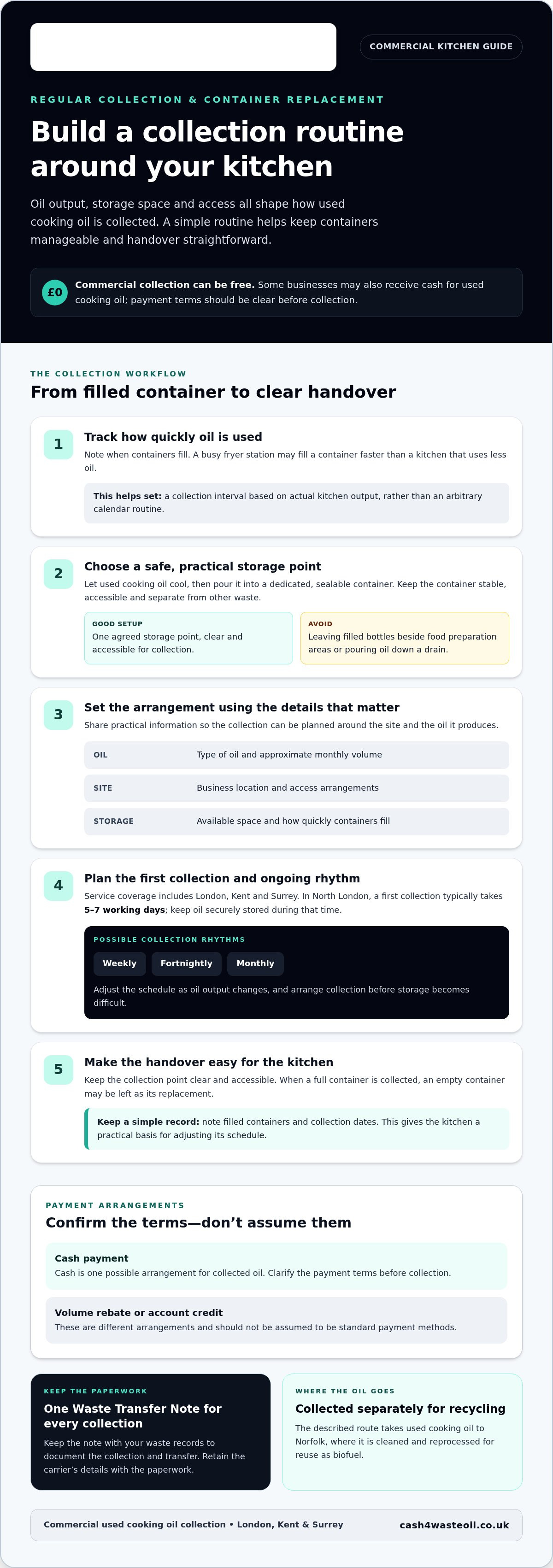
Commercial collections can be free, and some businesses receive cash for used cooking oil. Collection is for used cooking oil from commercial kitchens; the oil type, stored volume and location shape the practical arrangements.
Collection Frequency and Service Coverage
Collection frequency is how often a business arranges for stored oil to be removed. The right interval depends on how quickly the kitchen fills its container, available storage space and its collection route. A busy fryer station may fill a container faster than a kitchen using less oil, so track usage before setting a routine.
London, Kent and Surrey are service areas for commercial kitchen collections. In North London, a first collection typically takes 5-7 working days. Build that initial wait into your setup, and keep used oil securely stored until collection. After the first visit, a regular schedule can reflect actual kitchen output rather than an arbitrary calendar interval.
Use a simple routine: note when containers are filled and arrange collection before storage becomes difficult. Keep the collection point accessible and avoid mixing used cooking oil with other waste. This helps identify the material and makes handover straightforward.
Collection Setup and Quote Responses
Collection setup means deciding where used oil will be stored and arranging how it will be collected. Estimate the kitchen’s oil output and identify a practical storage point. When requesting a free quote, provide the business location and approximate monthly oil volume. These details help plan a suitable collection arrangement.
Container replacement means leaving an empty container when a full one is collected. Keep the storage area clear, stable and accessible so the handover fits smoothly into kitchen operations. If the business’s oil output changes, adjust the collection schedule to match how quickly containers fill.
A quote response time is the period between requesting a quote and receiving a reply. No response-time figure is available here, so plan by sharing complete details upfront: location, type of commercial kitchen, oil volume and access arrangements. Those factors also help establish whether collection suits the site.
A volume rebate is a payment arrangement linked to the quantity collected. Customer account credit instead records value against an account; neither should be assumed as a standard payment method. Cash payment is another arrangement, and the payment terms should be clear before collection. The amount of oil matters because it affects how often a kitchen needs collection and how containers are managed.
London restaurants can plan around three practical details: the oil they produce, the space available for storage and the collection schedule. Keep a simple record of filled containers and collection dates. This gives the kitchen a clearer basis for adjusting its weekly, fortnightly or monthly collection arrangement as needs change.
Environment Agency registration and Duty of Care documentation
Environment Agency registration identifies a waste carrier recorded with the regulator. For a London restaurant, checking this status helps establish who is collecting used cooking oil. Keep the carrier’s details with the collection paperwork, so staff can connect each transfer to the business that took the waste.
Duty of Care documentation records how a business’s waste is handled and transferred. Businesses have a legal responsibility to use a licensed company to collect waste oil and keep collection records for 6 years. This makes paperwork part of routine waste management, not an optional extra to file only when convenient.
A Waste Transfer Note is a record of a waste transfer between a business and its collector. Keep a copy for every collection and make sure it relates to the correct premises and waste. For example, a restaurant with more than one kitchen should file each note against the location where the oil was collected.
Use a consistent filing process for each collection:
- Save the Waste Transfer Note with the collection date and site details.
- Record the waste description as used cooking oil.
- Keep the collector’s business details alongside the transfer record.
- Store the documents together so staff can retrieve them when needed.
These details make it easier to trace a collection from the kitchen’s storage point to the handover. They also help prevent paperwork from becoming detached from the location or waste it describes. A digital folder organised by site and collection date can work alongside a paper copy kept by the relevant manager.
Registration and paperwork serve different purposes. Registration relates to the waste carrier; the Waste Transfer Note relates to a particular handover. A restaurant should keep both elements clear in its records, rather than treating a carrier’s status as a substitute for documenting collections. Match each note to the relevant collection before filing it.
Build record keeping into the collection routine. When the oil is handed over, file the Waste Transfer Note in the site’s waste records and note where it is stored. Assigning this task to a named role, such as the kitchen manager, helps keep paperwork organised during staff changes.
For restaurant oil recycling in London, these records create a practical trail for used oil collections. Keep the documents organised for the required retention period, and make the collection record easy for the responsible staff member to locate.
Service availability for businesses and households
Commercial oil collection is a service for businesses that produce used cooking oil. Restaurants, pubs, hotels and other commercial kitchens in London can arrange collection rather than using household disposal routes. In North London, commercial used cooking oil collection can be free. Separate the oil from other waste and keep it in a suitable container for collection.
Household disposal means handling small quantities through local food waste or recycling options. Check whether your local food waste service accepts cooking oil before putting it in the bin. North London has a specific restriction: liquid cooking oil cannot go in a food waste bin. Keep household guidance separate from commercial kitchen arrangements.
A reuse and recycling centre is a local site that may accept cooking oil for recycling. Some centres accept larger quantities, but acceptance depends on the site. In North London, cooled cooking oil can be collected in a plastic or glass bottle and taken to a reuse and recycling centre. Seal the bottle before transport and avoid carrying hot oil.
For domestic disposal, North London lists several centres for taking cooking oil: Summers Lane in Barnet; Regis Road in Camden; Edmonton EcoPark and Barrowell Green in Enfield; Western Road in Haringey; Hornsey Street in Islington; and Kings Road, Gateway Road and South Access Road in Waltham Forest. Gateway Road is closed, so it is not an available destination.
At Hornsey Street Reuse and Recycle Centre, cooking oil cannot be taken through the pedestrian zone. It can only be brought by car or van. This affects how residents plan a drop-off. Check the route and transport method before setting out, especially if carrying a sealed bottle from home.
If a household cannot access a reuse and recycling centre in north London, cooking oil can go into general waste in a sealed container. Do not pour it down the drain. For other household disposal, use a food waste bin only where the service accepts the oil. Follow the applicable local disposal route for household cooking oil.
For a London restaurant, commercial collection is the relevant route for routine kitchen volumes. Household bottles and local centres are intended for domestic disposal, not a busy kitchen’s ongoing oil output. Identify whether the waste comes from a home or business first, then follow the relevant disposal route.
Waste transfer notes and record keeping
A Waste Transfer Note records the handover of waste from a business to its collector. For used cooking oil, it helps connect a restaurant’s waste to a particular collection. Keep each note with the relevant site records, rather than relying on staff memory or scattered paperwork.
Record keeping is the routine of organising documents so staff can retrieve them when needed. Businesses have a legal responsibility to use a licensed company to collect waste oil and keep collection records for 6 years. Build that retention period into the restaurant’s filing process, whether records are stored digitally, on paper or both.
Start with one folder for each restaurant site. After a collection, save the Waste Transfer Note under that location and record the collection date in a simple index. A restaurant group with kitchens in Camden and Islington, for example, should be able to identify which site each note relates to without searching through a mixed folder.
Use a consistent naming system for digital files. Include the site name, collection date and document type, such as “Camden kitchen, collection date, Waste Transfer Note”. This makes records easier to find when a manager changes or a document is needed later. Keep paper copies in a labelled waste file if staff use physical documents.
Check each note against the collection before filing it. Match the business location and waste description to the handover, then flag any detail that needs correcting. This helps prevent a note for one restaurant being filed against another. Assign the task to a named role, such as the site manager, so responsibility remains clear during staff handovers.
Keep supporting records together when they relate to the same collection. For example, if the business records a cash payment for waste oil, file that payment record alongside the collection paperwork. Don’t treat a payment record as a substitute for a Waste Transfer Note; each document serves a different purpose.
Set a reminder to retain collection records for the full 6-year period. A yearly folder review can identify missing dates, duplicate files or documents saved under the wrong site. Keep access limited to staff who manage waste records, whilst ensuring a responsible manager can retrieve the paperwork promptly.
For restaurant oil recycling in London, clear records create a useful trail from kitchen collection to documented transfer. Arrange used cooking oil collection with Waste Transfer Notes to keep the handover paperwork connected to your collection routine.
Cash 4 Waste Oil: Used Cooking Oil Collection
Cash 4 Waste Oil provides used cooking oil collection for restaurants, pubs, hotels and commercial kitchens across London, Kent and Surrey. It’s a practical next step when your kitchen needs a collection route, a Waste Transfer Note and clear records for each handover.
The collection service is free, and Cash 4 Waste Oil pays cash on the spot for waste oil. It also provides a Waste Transfer Note, giving your business a record of the transfer. Keep the note with your site’s waste paperwork after collection.
If your commercial kitchen produces used cooking oil, contact Cash 4 Waste Oil to discuss collection.
Make your next collection part of the routine
Give one person responsibility for arranging collections and filing the related paperwork. Add the task to your kitchen’s regular operations so oil handling doesn’t depend on who happens to be on shift. A clear routine also makes it easier to adapt when kitchen practices change.
For restaurant oil recycling in London, choose an approach that fits your kitchen’s day-to-day workflow. Keep the collection point accessible, make record keeping part of the handover and ensure the right staff know where documents are stored. These steps make waste management a consistent process rather than a last-minute task.
Cash 4 Waste Oil offers Used Cooking Oil Collection, Waste Transfer Notes and Cash Payments for Waste Oil. If you’re ready to discuss your commercial kitchen’s collection needs, contact Cash 4 Waste Oil. A clear next step can help your team manage used oil with confidence.
Frequently Asked Questions
Are there legal requirements for waste oil disposal?
Yes. Businesses should arrange waste oil collection responsibly and keep records of handovers. For a London restaurant, this means making sure each handover has a corresponding record, then filing it so the responsible manager can retrieve it. Keep paperwork organised by kitchen site and collection date. This is especially useful for businesses with several premises or changing staff responsible for waste management.
How does the collection process work?
For commercial kitchens, the process starts by sharing the business location and approximate oil volume. Next, agree a collection arrangement, then have the used cooking oil ready for the collector. At handover, the business receives payment and a Waste Transfer Note. The collected oil is then recycled into biodiesel. For example, a restaurant manager can record each collection date alongside the note to keep the site’s records easy to follow.
How does this service contribute to sustainability?
Collected cooking oil can be reprocessed into biodiesel, giving a waste material another use as fuel. That creates a practical recycling route for oil from a London restaurant instead of leaving it mixed with general waste. Separating the oil at the kitchen helps it enter that processing chain. For a business reviewing its waste practices, the useful measure is whether its used oil is collected and directed towards reuse.
How is the price of used cooking oil determined?
The payment for collected oil depends on its volume and condition. Cash 4 Waste Oil provides a free quote, with rates described as competitive and transparent. Share an estimate of the quantity produced and explain how the oil is stored, so the quote can reflect the material being collected. The commercial collection service is free, and payment is made on collection; there is no fixed rate per litre to assume.
Is the service environmentally friendly?
Cash 4 Waste Oil states that all collected oil is recycled into biodiesel. Its collections are fully licensed and Environment Agency registered. For a restaurant, the environmental benefit begins with keeping used cooking oil separate and handing it over through a documented collection. This supports a traceable waste route and avoids treating recoverable cooking oil as ordinary rubbish. The biodiesel outcome does not remove the need to manage collection records.
Which companies collect and recycle used restaurant cooking oil in London?
Cash 4 Waste Oil collects and recycles used cooking oil from commercial kitchens in London. Its service is for restaurants, pubs, hotels and other food-service businesses, rather than household oil. The company provides a Waste Transfer Note for each collection and pays cash on the spot. It handles used cooking oil, vegetable oil and animal fats, not engine oil or industrial lubricants.
Which London areas and boroughs do cooking oil recycling services cover?
Cash 4 Waste Oil covers Greater London, including areas such as Camden, Islington, Soho, Notting Hill and Wandsworth. Coverage also includes Kent and Surrey. These names include both boroughs and neighbourhoods, so give the collection address when arranging service. A restaurant group can provide each kitchen’s location separately, helping distinguish its London premises from sites elsewhere in its operating area.
How often can restaurants arrange used cooking oil collections in London?
Restaurants can arrange flexible weekly, fortnightly or monthly collections. The right schedule depends on how quickly the kitchen produces used oil and how much secure storage space it has. A busy restaurant may need a closer collection rhythm than a smaller café. Track container fill levels during normal service, then choose the schedule that keeps storage manageable without interrupting kitchen work.